
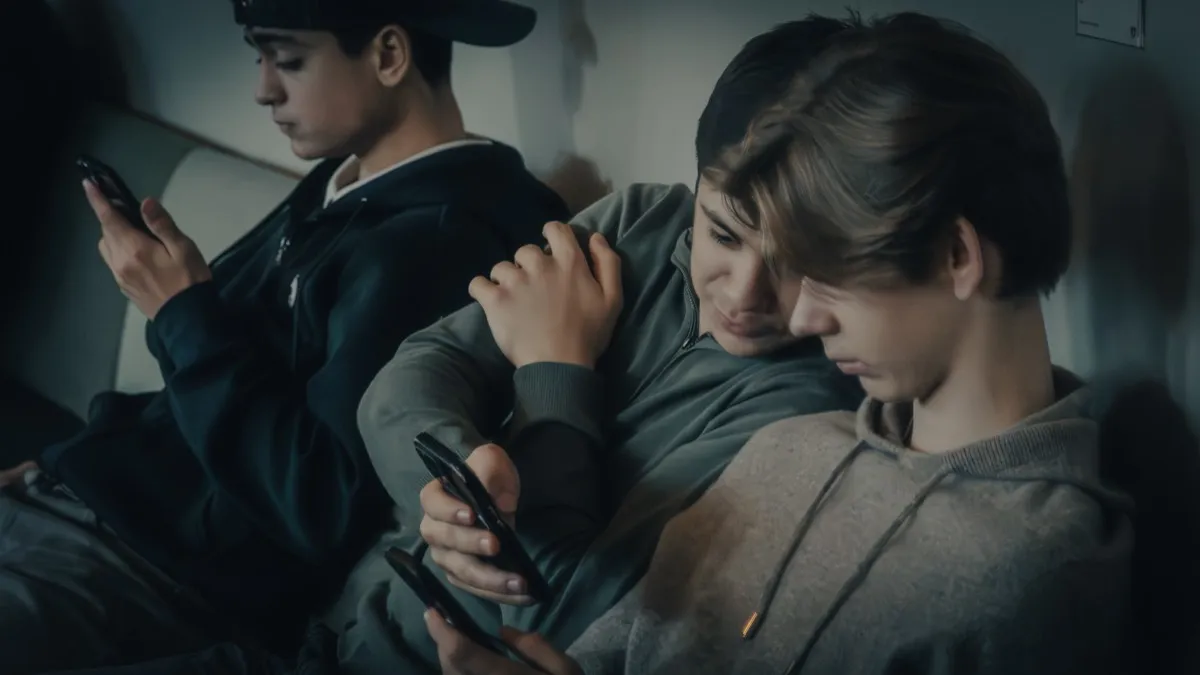
Chill time
Time without demands when you do not have to perform and are “free” to, for example, listen to music, draw, play, do crafts or scroll.
The page in brief
- Chill time is time when you do not have to perform. You can, for example, listen to music, draw, play games or scroll.
- Chill time is not wasted time. We need it.
- Scrolling can feel relaxing, but sometimes you feel worse afterwards or get stuck for longer than you meant to.
- Mix screen time with other calm things.
- Do not swap sleep for chill time.
Why is chill time so important?
In an everyday life full of demands and expectations – studying, training and social activities – the way we recover can easily get out of balance. Chill time is the time when we do not have to perform and can do things that feel relaxing and free of demands.
For many people, the phone or other digital media becomes an easy way to just hang out. That can be restful and lovely, but this kind of chill time can also be deceptive. If the content you see while scrolling makes you feel you are not good enough, makes you compare yourself or keeps you stuck for longer than you meant to, it is not actually restful. So it is wise to look at your chill time too, make sure it really is lovely and relaxing, and that it does not spill over into the other slices so that you end up short of sleep or exercise, for example.
Examples of chill time
It could be doing crafts, painting, baking, scrolling on your phone for a while, playing a game, listening to music or watching a series – as long as it feels relaxing and does not leave you in a worse mood than before.
What does not work?
Always being online
If chill time is mostly spent scrolling social media, in the long run it can create more stress than recovery.
When we replace sleep with chill time
Swapping sleep for chill time – such as scrolling or watching TV series – can give a false feeling of rest. We think we are recovering, although the body actually needs sleep. The result is often more tiredness, not less.
Feeling guilty about taking it easy
Chill time is not “wasted time” – it is an important part of a balanced everyday life.
What works?
Make time for chill time
Make sure you get a little time every day when you can relax without demands.
Find what works for you
Chill time can look different for different people – what matters is that it feels relaxing and fun.
Vary your chill time
Mix screen time with other calm activities such as reading, listening to music or a podcast, doing crafts or just hanging out.
Talk with your child
Open questions make it easier to talk about everyday life without it turning into an interrogation.
“What does your free time look like when you do not have school or organised activities? What do you most like doing then?”
“Many young people and adults easily get stuck on their phone or in computer games for longer than they want to. What is it like for you?”
“Would it be okay to look at the screen time on your phone together?”
Show that you are curious, ask open questions and listen to understand. Sum up what you have heard and ask if you have understood correctly. Focus on balance, not on what is wrong.
The questions come from Det syns inte’s conversation material “Må bra samtal” (feel-good conversations).

Want to work with this at school?
Det syns inte is a school programme about mental health, the brain and life with screens. It is built on drama films and research, and is used by teachers, mentors and school health teams together with the students. The programme’s website is in Swedish.